Wilmington, Massachusetts is a suburban community located about 16 miles north of Boston, set within the watershed of the Ipswich River and surrounded by neighboring towns including Woburn, Burlington, Billerica, Tewksbury, Andover, Reading, and North Reading. Its location places it squarely within the historic and geographic heart of the Revolutionary Valley.
During the colonial period, Wilmington was part of a shifting and often contested frontier, particularly during Queen Anne’s War in the early 1700s. The town’s early agricultural history is closely tied to the land, most notably through the Baldwin apple, which is believed to have been discovered in Wilmington in the 1790s at Butters Farm. While the origins were once debated among neighboring communities, the town now commemorates the discovery with a bronze plaque recognizing Wilmington’s place in New England agricultural history.
Wilmington also played a role in the region’s early transportation and trade networks. The Middlesex Canal, completed in the early 19th century, passed through the town and allowed local farmers to ship goods efficiently to market, linking Wilmington to the broader economic story of the Merrimack Valley.
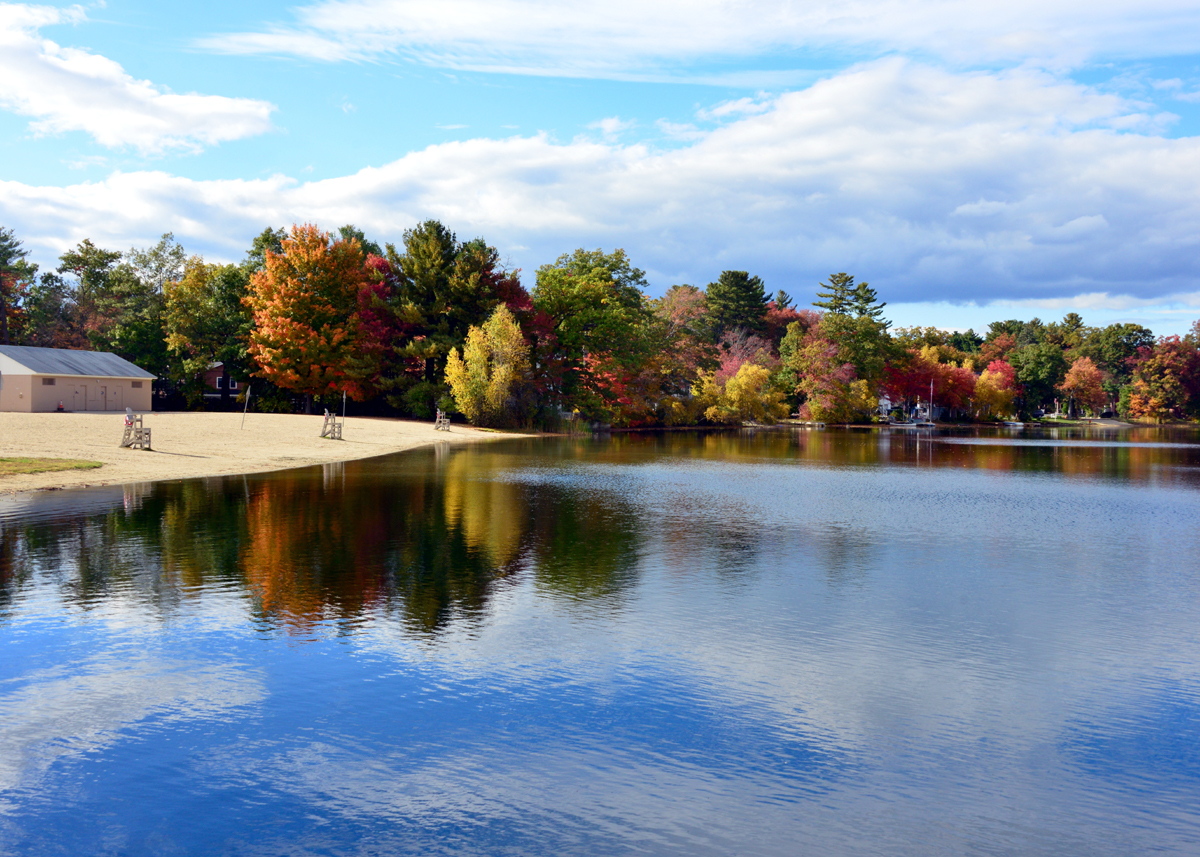
Today, Wilmington balances its historic roots with a strong sense of community life. Silver Lake remains a defining natural feature and a popular destination during the summer months for swimming, walking, and outdoor enjoyment. The town supports a wide range of civic services and community spaces, including an active recreation department, senior center, town museum, and well-used library.
With a population of just over 22,000, Wilmington is a vibrant residential community that offers convenient access to Boston, Salem, and the North Shore, while maintaining its own identity shaped by history, natural beauty, and local pride within the Revolutionary Valley.
Wilmington, Massachusetts
Wilmington, MA